
The two most popular voice and data digital line services are T1 and E1.
E1 and T1 are standards for digital telecom operators, originally developed on
different continents, for simultaneous transmission of voice calls using time
division multiplexing. You may only be familiar with one of these services, but
not the other. In this article, we will see their difference.
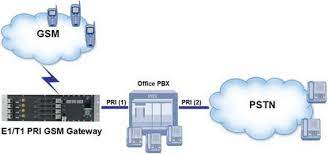
What is T1?
T1 is a North American digital communication operator standard, and is a
digital carrier signal that transmits DS-1 signals. Its data rate is
approximately 1.544 Mb/s. It consists of 24 digital channels, each with a
bandwidth of 64Kbps. The physical transmission of the T1 channel is completed
using 4 copper wires divided into two pairs. The scalability of T1 can reach
200 and above users. It also provides some services similar to Internet
providers. Most computers use T1 connections. This technology allows your modem
to have a higher speed and is a cost effective technology.
What is E1?
E1 is similar to T1. T1 is a North American term, while E1 is a European
transmission term. E1 is composed of 32 channels, which can be used to carry
voice calls at the same time, and each channel is called a time slot. The data
rate of E1 is approximately 2 megabits per second and the speed is 64 Kbps,
which results in a total speed of 2048 Kbps for the E1 carrier. 2 of the 32
channels have been reserved, one channel is used for signaling, and the other
channel is used for control. The E1 standard has two physical delivery methods,
called balanced physical delivery and unbalanced physical delivery. Balanced
physical transmission is the most popular method. It uses 4 copper wires
divided into two pairs for transmission and reception paths.
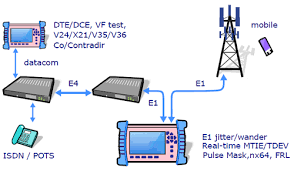
Difference between T1 and E1
Data Rate
The main difference between T1 and E1 is data rate. Thedata rate of T1 is approximately 1.544 Mbps, and E1 has the data rate of
2.048 Mbps.
Channel
Another key difference between T1 and E1 is that T1
consists of 24 digital channels, and E1 is composed of 32 channels. For E1, 2 of the 32 channels
have been reserved, one channel is used for signaling, and the other channel is
used for control.
What is E1 Modem?
E1 fiber optic modem modulates
E1 signal into single mode or multimode fiber. It is suitable for transmitting
additional management data channels in different optical fibers. The optical
fiber for data transmission can be used to monitor local and remote devices
without conflict.
Conclusion
Above all is the difference between T1 and E1. T1 and E1 links can
simultaneously transmit and receive multiple data or voice channels or unchannelized
raw bit streams. These two standards use transmit and receive paths
respectively to achieve full-duplex communication.
Baudcom offers all types of E1 related products. For more information, please visit Baudcom.


